“Does what we learn in school prepare us for
real life?” Since time immemorial, teachers, parents and students have been
waging a war over the relevance and applicability of education. School has been
known to some to educate pupils and help them advance and succeed in their
future. Your parents most likely told you to get good grades and gain admission
into a decent college. But this is not the case for others. Many other people
believe that school does not prepare you for real life, as it only makes you
book-smart. Many students question the relevance of typical school subjects as
they are unlikely to ever use the countless formulas they are forced to
memorise in the future. After considering these perspectives, I am of the
opinion that education is relevant and important to people of all ages.
“What
is the importance of academic subjects?” This often-asked question is seldom
answered satisfactorily. What benefits will we gain from finding out how many
moles there are in a sample of compound? Many fail to realise that we learn
into order to better ourselves. Have you ever felt like an outcaste in a
conversation just because you did not have a clue about Newton’s laws? Have you
ever cursed under your breath when a chat with your friends turned into a
discussion on polynomials? A good and broad education allows you to interact
with other people and look at things through different lenses. The uneducated
will only see a painting while the learned will see the true meaning – the
story and feelings behind every brush stroke.
Academic
subjects are not the only entities in our daily school lives. Schools also
develop our talents through co-curricular activities (CCA). CCA enables
students to showcase their talents and take time off from more cognitive work.
The development of creativity, leadership and even social interaction skills
are backed by CCA. Character and citizenship education (CCE), another key
component in the school lives of many students, is equally vital as it plays a
crucial role in inculcating moral values, a sense of rootedness to the nation
and teaching us how to act and protect ourselves in certain situations. Coupled
with CCA, CCE results in socially and emotionally skilled boys and girls who
care for the community and the environment.
An
often proffered reason why certain people find school useless stems from their
belief that a student need to learn so many different subjects. However, that
has its disadvantage. Even though many students may have their favourite
subject, it would be impossible for them to know that without experiencing and
learning more about every subject. The more subjects we study, the more
opportunities and options we have in understanding who we are and who we want
to be in the future. A variety of subjects serves a broader purpose, beyond
preparation for career or work. Fewer subjects limit a student’s understanding
of himself, and closes off options available to him.
In
conclusion, school is one of the most important things in our lives. It
develops in us varied perspectives of looking at life. It hands us skills
necessary to function effectively in society. It not only helps students learn
concepts and skills, it allows them to negotiate their place in the world
socially, academically and emotionally. Education is the most powerful weapon
which you can use to change the world. So brush off your ignorance, and enjoy
your school life.
Good morning Mdm Shanti, Mr Derick, teachers
and fellow Riversidians. My name is Bevan and I am the chairperson of our
school’s Environment Club. I am here today to raise awareness about the
honestly terrifying waste issues here in our country and hopefully get all of
you to join me on the path to a greener and more sustainable future.
Waste management is a serious issue, not
just here but all over the world. We are slowly turning our oceans into
plastic, polluting the air we breathe in and killing off hundreds of species
every year all because of our selfish actions. Yet, many of us are barely even
aware of the current state of our world. In 2017, Singapore alone generated 7.7
million tonnes of waste. That is enough to completely fill up 15,000
Olympic-sized swimming pools! At the current rate we are going, Semakau
Landfill, which is Singapore’s only landfill, will be full by 2035, less than
two decades and well within many of our lifetimes. We have a relatively small
population when compared to the 7 billion people living all around the world
and yet we are already producing unmanageable amounts of waste. Just imagine
the amount of waste that is produced globally! We are running out of time and
cannot afford to wait. For the sake of all our futures, join me in this Zero
Waste Campaign.
The 3Rs – reduce, reuse and recycle – are
commonly referred to as the hierarchy of waste management, and for good reason.
They are simple, practical and easy to implement into our hectic lives, yet
they can have a tremendous impact on the fight against waste. Much of the
things we consider waste are not actually waste. That plastic bottle you tossed
away without a second thought could have been recycled, that empty cardboard
box that you threw away could have been repurposed and the leftover food on
your plate that you dumped into the tray return station could have been
avoided. As long as all of you here are willing to go green and practise the
3Rs, maybe the battle for a cleaner future will be a battle we can win.
Now, some of you might be wondering, “What
in the world are we supposed to do?”, and to that I say “It is simple”. The
next time you have a meal, be it takeout or homemade, try getting smaller
portions. Many of us, quite literally, bite off more than we can chew and end
up wasting a significant amount of food. By taking only what you can eat, you
will be reducing your waste production. Moreover, all of you can try exercising
your creativity. Instead of immediately throwing away unwanted products, try
thinking of new and creative ways to use them. My family recently bought a new
desk, and instead of tossing the cardboard box that the desk came in, we
repurposed it into a bookcase to store all my textbooks. Lastly, all of us
should actively try to recycle. The government has provided us with easy access
to recycling bins, many of which can be found around our homes and even in our
school, and we should fully take advantage of them. You could perhaps set up a
simple disposal system at home or in your class which separates recyclables
form non-recyclables, making the job of recycling hassle-free and at the same
time cultivating it into a daily habit.
At the end of the day, protecting the
environment is our responsibility. Going green is free. By choosing to go
green, we have nothing to lose, yet everything to gain. Join me in the fight
against pollution. Join me on the path to a green and sustainable future. Join
me in taking a step in the right direction. Start going green today.
“We are all connected by the internet” –
Stephen Hawking.
-beep- mentioned subject has no gender
-beep-
1990: A child looked out into the world,
its eyes brimming with curiosity. Suddenly, information flooded into its brain,
facts after facts, crammed into the child. Its eyes brightened up, a moment of
“Aha!” every few seconds as knowledge about Earth appeared before the child,
before being shoved to the side by other newfound facts. The child’s name is
the Internet.
“Internet… I’m called the internet,” the
child mused over its own name, testing out each syllable an rolling out the
r’s.
A few moments passed, and a question
appeared before it. Internet jumped in fright at the sudden intrusion and
before it could answer, thousands and thousands of articles and websites from
its brain followed the question, some of them specific and some of them vague.
Internet raised and eyebrow. “I guess this is my purpose of being here then.”
2019: Internet rolled its eyes at the
latest trends and shook its head at some… slightly irrelevant questions.
“‘If humans think that birds fly, do crabs
think that the fishes fly?’ Are you kidding me?!” It scoffed, especially at
those newer generations that do not seem to possess general knowledge. “1+1=3,
I applaud you for your excellent calculation.”
Now, there are more online platforms and
social media, almost everyone is connected by the Internet. Although there was
some excellent discussion about certain topics with people expressing opinions
calmly and encouraging other people with warm hearted compliments, there are
still cyber-bullying and childish arguments over insignificant things. The
Internet sighed, thinking about how different itself and others are, even if
both are teenagers.
“Stop bullying her, please.” Internet
glared ferociously at the comments people gave and hiding behind their fake
personas to join forces against one person. “This happens every day and I’m
getting tired of it.” It ranted to no one, sometimes the Internet felt lonely,
even though everyone was connected to it. Ironic, yet true.
One day, a person asked, “What does the
future hold for humankind?” The Internet gasped, and as usual, answers and
articles started flooding in.
“What future? If humankind continues like
this, what would happen?” Internet pondered over possible scenarios, after all,
it did not know everything, the Internet could not predict the future.
What does the future hold for humankind?
No one knows, not even the most intelligent or wise person. Things can change
when you least expected it. Some might write essays on the resplendent future,
some write poems about the despondent future ahead.
“Only time will tell. Only time.” Internet
gave a small smile, and looked out into the world again, like what it did as a
child.
To:
Mdm Shanti, Principal of Riverside Secondary School
From:
Toh Ler Xuan, Chairperson of Student Council, Riverside Secondary School
Date:
08 May 2019
On behalf of the students in Riverside
Secondary School, I would like to propose incorporating social media during
lessons. After conducting a survey amongst my schoolmates on how their school
experiences are like, I discovered that that they feel that lessons can be made
more engaging and interactive with the use of social media platforms.
Therefore, I think that incorporating social media during lessons would be an
amazing idea and I hope you can be convinced of this idea too.
Social media has both advantages and
disadvantages. While popular opinion is that social media brings about
undesirable consequences to its users, another school of thought believes that
social media does bring about benefits. Firstly, social media can be used for
platform-building. Students can develop an online presence amongst the class or
even the school. This can then allow students to build on the skills they are
passionate about, for example, coding. Secondly, social media can strengthen
friendship amongst the students. When students have healthy friendships, they
do not only feel accepted for who they are but will also feel empowered and
connected to the world. Social media makes students more confident and outgoing
about sharing their ideas. Lastly, social media reduces feelings of isolation.
This makes students become individualistic and more extroverted and have higher
self-esteem. Students would be able to develop stronger social skills due to
social media use.
I think that social media should be
incorporated during History and Science lessons. During lessons, teachers can
use the idea of knowledge building to introduce the topic to the students. For
example, teachers can use social media to allow students to upload their concepts
of the topic, and allow the students to take a look at each other’s posts, by
building on to each other’s’ ideas. As History is very content-heavy, the
different factors can be divided amongst the class such that students will be
able to learn from one another. This also promotes self-directed learning which
will help the students in their tertiary education.
While the school incorporates social media,
it need not be used for every single lesson. This way, the teacher will have
time to look through the progress of online learning and review it back to the
class on the same week. This will ensure that the class is always on track.
It is also important to ensure that students
are responsible users in learning using social media. Students should not post
anything that will hurt others physically, mentally or emotionally. Students
should not post anything that is not related to the topic. Students should
always make sure the work done is up to the best of their abilities. Should any
of the mentioned happens, the right of learning using social media will be
stripped off the students.
I am positive that incorporating social media
in class will make lessons more engaging and fun for the students. I hope that
you will consider this proposal favourably. Thank you.
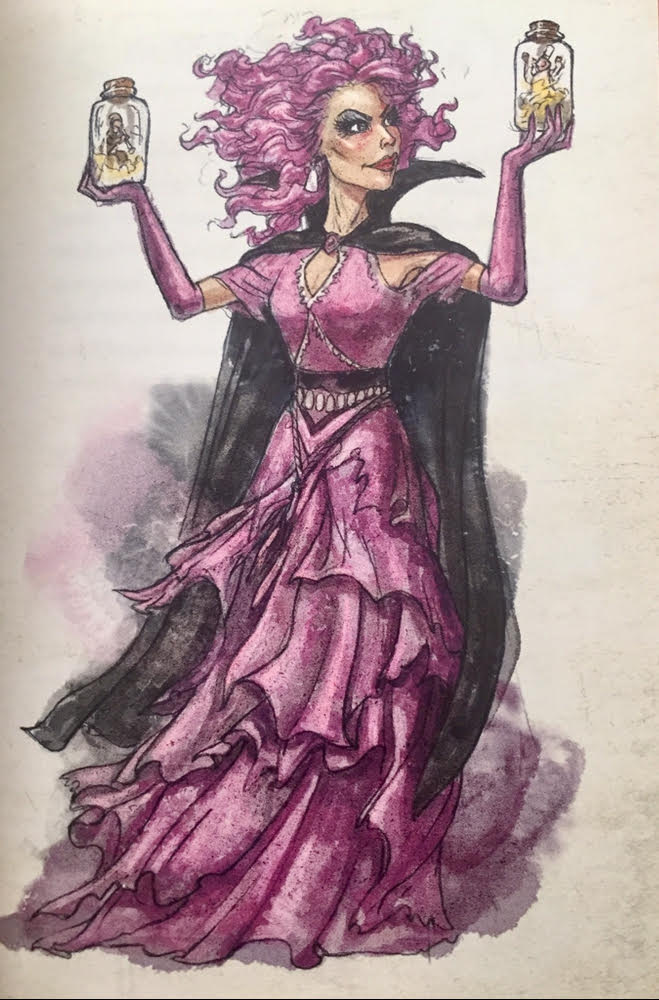
Long, long time ago, on a TALL hill beside Tanjong Pagar Secondary
School, there lived many villagers who did farming. They earned a living by
selling the crops they grew. However in a dark forest in the middle of the
hill, there lived a sorceress who enjoyed making people’s life miserable
because everyone had left her out because of her appearance that was hideous.
She was an old hunchback in her 90s. Her face was filled with wrinkles, she
bloodshot eyes and white frizzy hair that had never been washed.
“These people don’t know how powerful I am and they take me for
granted. I will make sure they pay for their sins.” She began looking
through her scrolls to find a spell to kill the villagers slowly. She started
casting a spell ” abhujikarrapayakopivisvadean ” Well, she thought
the spell would kill them but she was mistaken. The spell she used made the
villagers cough for the rest of their lives. At about 5 am in the morning, the
villagers started coughing one after another.
“Why *cough* are we all *cough* coughing?!” Then the sorceress
immerged from her hiding.
“HE HE HE now u know how powerful I am. You all look pathetic now! If
you want the cure, you have to follow what I say!”
The villagers said, ” what *cough* do we have to do?”
The sorceress smirked. “You have to live under me for 5 years and
in the year where there will be an eclipse and I will cure all of you.”
Five years passed by under the sorcerous’ control. Just as the eclipse was
about to happen, she died as the eclipse was the time for her to pass on so the
villagers could not be cured and had to live with the spell that was cast by
the sorcerous. Therefore the hill was then called “Bukit Batok ” which is
translated to ” Coughing Hill ” from Malay.
A long long time ago in the 1940s, where the outskirts of Singapore
lived a young women named Sem. Sem was forced to drop out of school to support
her father’s business of selling vegetables after her mother passed on.
The British had their naval base located shores of Singapore’s beach,
where Sem and her family lived not so far away from.
On 14th February of 1945, the Japanese charged onto Singapore’s shores
and threatened to take over this little British colonised country. The British
sent all their troops back to Britain to support their country and had
surrendered to the Japanese. Many men were injured while resisting the
Japanese.
“Oh dear…” Sem muttered under her breath as her sharp ears perked up
hearing the radio announcement about the surrender of the British. She sprung
up on two feet and rushed towards her window, where she could clearly see what
was going on the shore.
Before Sem could climb out of her window to help the wounded men on the
shore, her father drew the curtains as he pulled on her wrist, hard. “Go out
there if you have a death wish!” Her father warned sternly.
Sem being the ignorant girl she is, sneaked out of the house, snatched
the vegetables stored on the porch and rushed to the men groaning in pain. Sem
wanted so much to help them, but she was no doctor. “What can I do?” Sem
thought to herself.
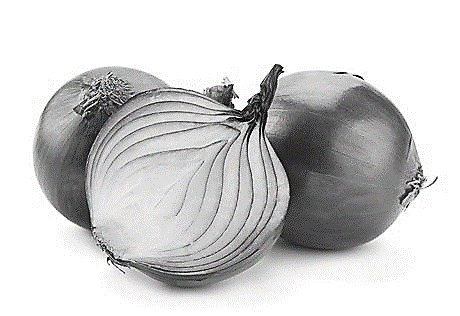
The onions that laid in the basket next to her caught her attention as
she remembered how her mother used to ask her to clean the back of the wok with
onions. Sem’s eyes immediately lit up as she proceeded to peel and break the
onions into smaller pieces. She then went to one of the men and placed the
onion on his wound. She then tore off the bottom of her sleeves and secured the
onion on the man’s wound with the thin fabric.
That day, Sem saved the wounded men that laid on the shores of
Singapore’s beach with onions. The news soon spread through the village, and
people began to call the village “Sem’s bawang” which means Sem’s Onions in
malay. And that village became the Sembawang we know of today.
‘Ah boy ah, come sit down. Let Ah Gong tell you a story,’ he said as I
hurried over, perching myself on the edge of his bed. Ever since young, I have
always liked these stories that he told, tales which encapsulated different and
intriguing fragments of the past.
‘It was a warm but overcast day, the type of weather where you knew it
would rain soon, for you could smell it in the air,’ he began, ‘creating a
sense of foreboding that hung over the soldiers of the Singapore Volunteer
Corps. The island that is now currently known as Sentosa was sprawled below
Sergeant Mok’s watchful eyes as he scrutinised the land that was placed under
his care.’
Leaning forward closer towards grandfather, I craned my neck towards the
frail source of his voice, for I knew that the story was about to get
interesting. ‘ So? What happened?’ I huffed in anticipation, waiting for him to
continue the story.
‘Patience, my sweet summer child,’ his eyes twinkled a bright grey as he
let out a hearty chuckle, ‘Let me continue. Now this Sergeant had led his troop
of faithful soldiers throughout the years, and they felt, or rather, knew that
a battle was almost as inevitable as the oncoming storm, rolling across great
distances to reach the island, and so when the first few Japanese men waded out
of the sea, with a gun in hand, he knew that this battle would be his very last
stand. Nevertheless, he led his men towards the enemy, marching across the
tumultuous terrain to meet the enemy with fire and blood.’
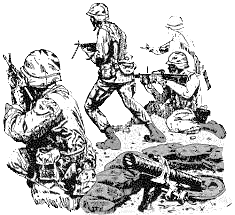
‘The battle was fought and won,
but at a great cost. The vast majority of the sergeant’s men had been slain in
battle, and only a few of his men had survived, but were now cornered into the
thin bridge that was the sole connector to the Singaporean mainland. As the
Japanese circled the Sergeant and his remaining men like a pack of hungry
hyenas looking for a meal, the sergeant looked around and knew what he had to
do. A crate of explosives had been stored into the establishment they were
currently hiding in, unbeknownst to the Japanese.’
‘The first droplets of rain had begun their fall outside when the sergeant reached into his belt and pulled out a grenade, hurling it across the room, only for the Japanese soldiers’ mocking laughs to be melted off as heat and splinters of wood blasted every man’s face with a roar. And so, as the sky finally relented, it let loose a rumbling clap of thunder as water from above showered the bodies of all the men, as they laid amid the burning wreck, sucking in their last breaths.
How do you think that Singapore was defended from the Japanese?’ Grandpa smiled wryly, creases on his face deepening as the trees outside the window rustled from a gust of cold wind, engulfing us with the scent of petrichor, ‘Wherever did you think the idea of the spirits of Sentosa came from?’
“Harry! Paul! Angela!” Lady Windsor called out frantically as
she travelled deeper into the woods. Just a few hours ago, Lady Windsor’s three
children had run off into the woods nearby in search of entertainment for
themselves after they had arrived at their cousins’ home. At first, Lady Windsor
did not pay them any mind and let them go, only reminding them to come back
before the sun set. Lady Windsor thought of it like any other day. Despite
being mischievous and adventure-seeking, her children had always made sure to
come back home safely and early. However, as the moon crept higher and higher
in the night, Lady Windsor began to worry over the safety of her dear children.
Before she realized, she had bolted out of the house and headed straight into
the woods. Her eyes scanned everything around her, from the leaf-littered
ground she ploughed through, to the never ending number of twisted trees.
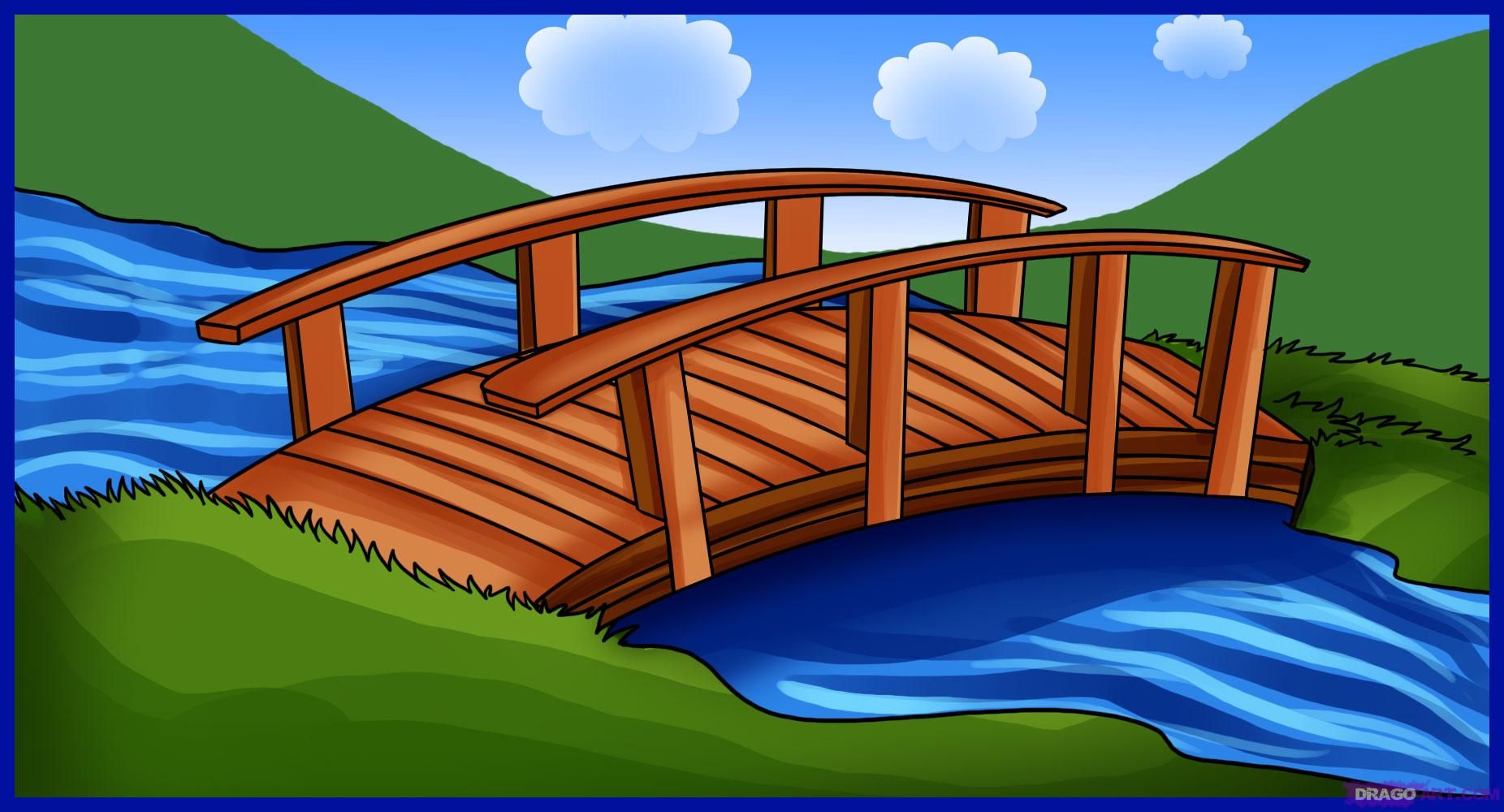
Soon, she reached a clearing in the woods. Before her was a river, water
thrashing heavily against large stones that lined it. Across that river was a
bridge, where Lady Windsor noticed something shiny dangling on the edge of the
bridge. It was a pearl necklace that her daughter, Angela, always wore. A chill
ran down Lady Windsor’s spine and she hurried down the river. Her heart thumped
vigorously, as if it was about to jump out at any moment. It was hard to tell
whether she was restless in hopes of finally finding her children or if she
anticipating something far worse.
As she turned the corner, right in front of her eyes was a horrific
scene. Her two sons, Harry and Paul, lay motionless on the ground right next to
the river. They were blue in the face, with their clothes drenched with the
murky water, which was most likely from the river. With the amount of time that
had passed, the chances of them being able to be resuscitated had fast
disappeared. Full of grief and despair, she hurried back home, where she
reported to the nearest police station about her son’s death and her missing
daughter Angela.
Days passed and Angela was yet to be found. With each day passing by
painfully, the hope of finding Angela dwindled within Lady Windsor. That was
the case until she began hearing rumours of a little girl calling out for her
mother around the bridge where the bodies of two young boys were found. This
prompted the possibly delusional lady Windsor to stay by the bridge for the
rest of her life, wishing to accompany her precious daughter’s soul. Over time,
the locals in the area got used to her perpetual presence by the bridge, even
referring to her as the ‘Ang Mo’ (Caucasian in dialect) lady who seemed to live
at the bridge. That bridge is now called the ‘Ang Mo Kio Bridge’, believed to
be named after the tragedy Lady Windsor faced.



 Writers by the River